News
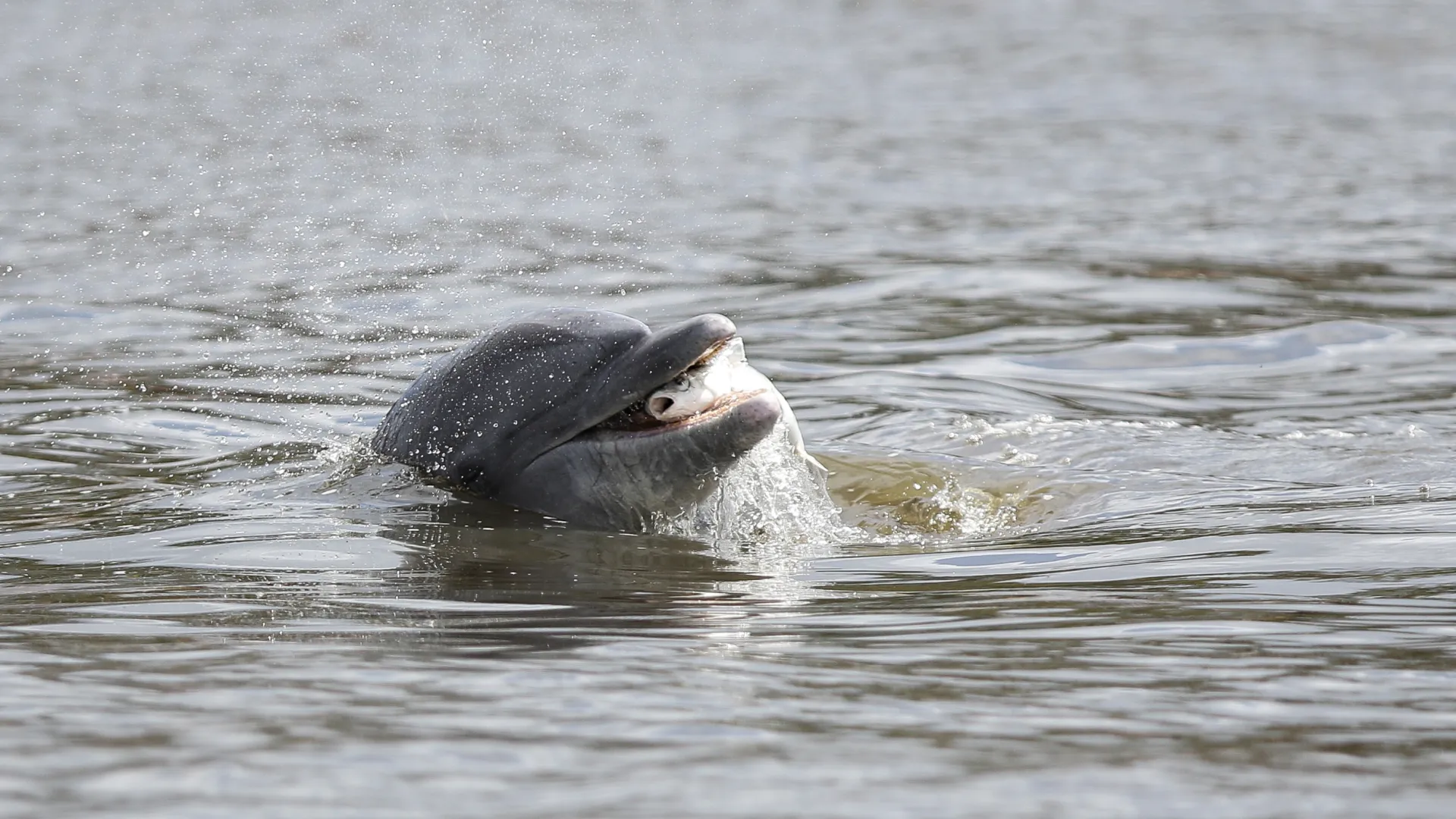
Lahille's Bottlenose Dolphin Highlighted at the International Whaling Commission Scientific Committee
From 27 April to 8 May 2026, the city of Bled, Slovenia, hosted the 70th meeting of the International Whaling Commission (IWC) Scientific Committee.
The meeting brought together approximately 230 experts from more than 30 countries to discuss the latest scientific advances in cetacean conservation, covering topics such as population assessment, fisheries bycatch, vessel strikes, marine pollution, climate change, animal health, and conservation and management strategies.
As part of the discussions on Conservation Management Plans (CMPs), the Scientific Committee received the technical report produced from the Latin American CMP Workshop, held in Santos, Brazil, in 2025. The report summarizes the main achievements, challenges, and recommendations for strengthening the implementation of the different CMPs across the region.
The Lahille's bottlenose dolphin CMP is an official IWC conservation instrument currently coordinated by Brazil. The Gephyreus Project, in turn, is a non-governmental scientific initiative that has coordinated a trinational research and conservation network across Brazil, Uruguay, and Argentina since 2018. The scientific knowledge generated by this network played a key role in the development of the CMP and continues to support its implementation.
"The Gephyreus Project was created to bring researchers together, generate long-term scientific knowledge, and translate that knowledge into effective conservation action. Seeing this work inform discussions within the IWC Scientific Committee demonstrates how scientific collaboration can generate real conservation outcomes, especially for endangered species," said Pedro Fruet, Scientific Coordinator of the Lahille's Bottlenose Dolphin CMP.
In Bled, the presentation of the report resulted in specific recommendations for the Latin American CMPs, with particular emphasis on improving population monitoring and mitigating threats such as fisheries bycatch.
The report's recognition at one of the world's leading forums for cetacean research and conservation demonstrates how collaborative science can help inform international conservation policy. This outcome strengthens the implementation of the Lahille's Bottlenose Dolphin CMP and further promotes the engagement of governments and organizations in the conservation of this endangered dolphin.